

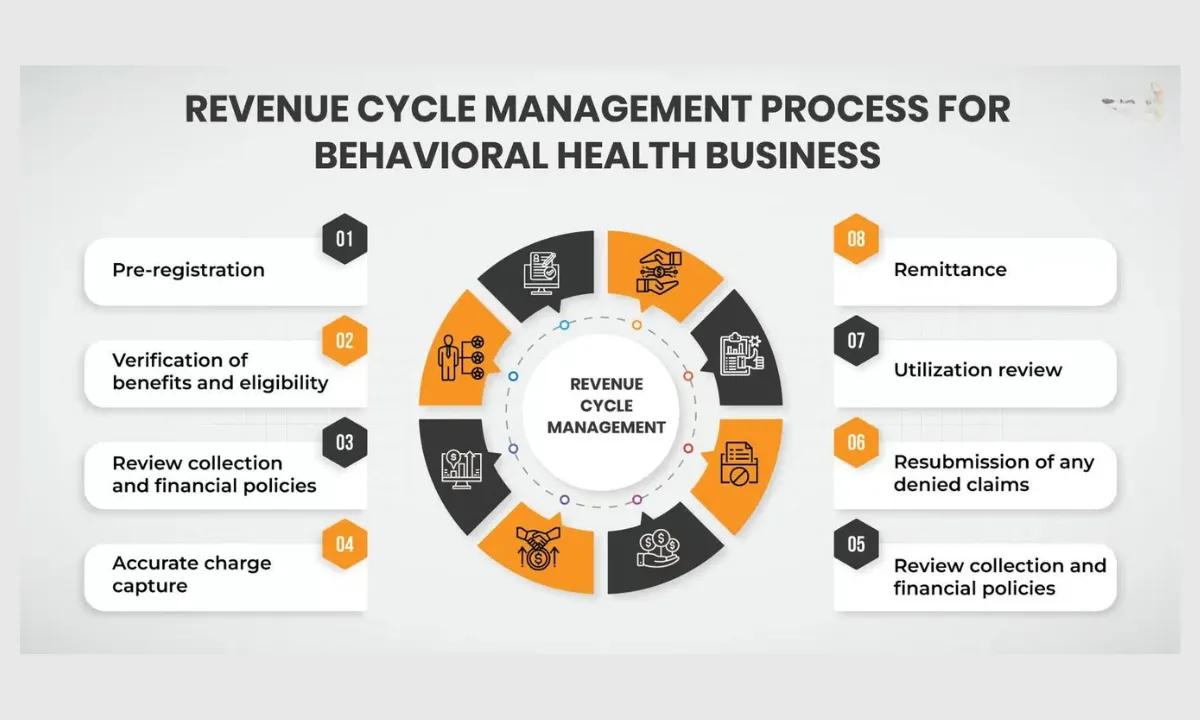
Behavioral healthcare providers play an important role in helping patients manage mental health conditions, substance use disorders, anxiety, depression, and emotional well-being. However, delivering quality care is only one part of running a successful practice. Managing billing, insurance claims, and reimbursements can be complicated. This is where behavioral health revenue cycle management becomes essential.
A strong behavioral health revenue cycle management process helps providers improve cash flow, reduce claim denials, and ensure timely reimbursements. Since mental and behavioral health services involve unique coding requirements, payer rules, and documentation standards, even small billing mistakes can lead to delayed payments or revenue loss.
In this step-by-step guide, we will explain how behavioral health revenue cycle management works and how providers can improve their billing process for better financial outcomes.
What Is Behavioral Health Revenue Cycle Management?
Behavioral health revenue cycle management (RCM) is the complete financial process used by behavioral healthcare providers to manage patient revenue. It begins when a patient schedules an appointment and continues until the provider receives payment for services.
The goal of behavioral health revenue cycle management is to streamline billing operations, reduce denials, verify insurance eligibility, and maximize reimbursements. It covers everything from patient registration and insurance verification to medical coding, claims submission, payment posting, and denial management.
Without an effective RCM system, behavioral health practices may struggle with unpaid claims, administrative inefficiencies, and financial instability.

Why Behavioral Health Revenue Cycle Management Matters
Behavioral health providers often face unique billing challenges, including:
Complex insurance rules for mental health services
Frequent authorization requirements
Time-based CPT coding issues
High denial rates due to documentation errors
Challenges with telehealth reimbursement
An organized behavioral health revenue cycle management strategy helps providers maintain consistent revenue while focusing more on patient care instead of administrative problems.
Step 1: Patient Scheduling and Registration
The first step in behavioral health revenue cycle management starts when a patient books an appointment.
During registration, collecting accurate patient information is critical. Providers should gather:
Patient demographics
Insurance details
Referral information (if needed)
Contact details
Consent forms
Errors at this stage can create claim rejections later. Even simple mistakes such as incorrect policy numbers or spelling errors can delay reimbursements.
Having a streamlined patient intake process improves billing accuracy and minimizes claim issues.
Step 2: Insurance Verification and Eligibility Checks
Before treatment begins, providers should verify insurance eligibility.
Insurance verification ensures:
The patient’s coverage is active
Behavioral health services are covered
Co-pays and deductibles are identified
Prior authorizations are obtained if required
Skipping this step can result in denied claims or unexpected patient balances. Behavioral healthcare providers should verify insurance before every visit because coverage details may change.
This step is essential for reducing financial risk in behavioral health revenue cycle management.
Step 3: Prior Authorization Management
Many behavioral health services require prior authorization from insurance companies.
Services commonly requiring authorization include:
Intensive outpatient programs (IOP)
Substance abuse treatment
Psychiatric evaluations
Long-term therapy sessions
Failure to obtain approval before treatment can result in claim denials.
Providers should establish a process for tracking authorization timelines and renewal dates to avoid disruptions in reimbursement.

Step 4: Accurate Medical Coding
Medical coding is one of the most important stages of behavioral health revenue cycle management.
Behavioral health providers commonly use CPT and ICD-10 codes to document services. Common coding issues include:
Incorrect psychotherapy time codes
Missing modifiers
Inaccurate diagnosis codes
Documentation mismatches
For example, using the wrong psychotherapy code based on session duration may trigger denials.
Accurate coding helps providers receive proper reimbursement while maintaining compliance with payer requirements.
Step 5: Claims Submission
After coding, claims are submitted to insurance companies.
A clean claim submission is critical for reducing delays.
A clean claim includes the following:
Correct patient details
Accurate CPT and ICD-10 codes
Supporting documentation
Verified provider information
Electronic claim submission can improve efficiency and reduce human errors.
Behavioral healthcare organizations that prioritize claim accuracy typically experience faster reimbursements and lower denial rates.
Step 6: Payment Posting
Once claims are processed, insurance payments and patient payments must be recorded properly.
Payment posting helps providers:
Monitor reimbursement trends
Identify underpayments
Reconcile financial records
Improve revenue tracking
Reviewing explanation of benefits (EOBs) carefully allows providers to spot discrepancies and billing issues quickly.
Proper payment posting ensures transparency in behavioral health revenue cycle management.
Step 7: Denial Management and Appeals
Claim denials are common in behavioral healthcare billing. However, denied claims should not be ignored.
Common reasons for denials include:
Missing authorizations
Incorrect coding
Incomplete documentation
Eligibility issues
Filing deadline errors
A strong denial management strategy includes the following:
Identifying the denial reason
Correcting claim errors
Resubmitting claims quickly
Filing appeals when necessary
Reducing denials can significantly improve practice profitability.
Step 8: Patient Billing and Collections
Patient financial responsibility has increased in healthcare.
Behavioral health providers should offer transparent billing by clearly communicating:
Co-payments
Deductibles
Out-of-pocket expenses
Payment plans
Clear communication improves patient satisfaction and increases payment collection rates.
Using automated billing reminders can also reduce overdue balances.
Step 9: Revenue Analysis and Reporting
The final step in behavioral health revenue cycle management involves reviewing financial performance.
Practices should regularly track key metrics such as the following:
Days in accounts receivable (AR)
Claim denial rates
Collection percentages
First-pass claim acceptance rates
Revenue trends
Data-driven reporting helps providers identify financial weaknesses and improve billing operations.
Consistent monitoring ensures long-term growth and financial stability.
Common Challenges in Behavioral Health Revenue Cycle Management
Behavioral healthcare providers often encounter obstacles such as:
Frequent payer policy changes
Complex documentation requirements
Insurance denials
Staffing shortages
Compliance risks
Overcoming these challenges requires expertise, technology, and a structured revenue cycle management process.
How Revantage Healthcare Business Solutions Can Help
At Revantage Healthcare Business Solutions, we understand the unique challenges behavioral healthcare providers face. Our expert team specializes in behavioral health revenue cycle management, helping practices improve reimbursements, reduce denials, and streamline billing operations.
From insurance verification and medical coding to claims submission and denial management, we provide end-to-end support tailored to behavioral health providers. Our goal is to simplify the revenue cycle so providers can focus more on patient care and less on administrative burdens.
Whether you manage a mental health clinic, therapy practice, or substance abuse treatment center, Revantage Healthcare Business Solutions offers reliable billing solutions designed to maximize revenue and improve operational efficiency.
Conclusion
An effective behavioral health revenue cycle management process is essential for maintaining financial health in behavioral healthcare organizations. Every step — from patient registration and insurance verification to coding, claims submission, and denial management — plays an important role in improving revenue performance.
By following a structured step-by-step approach, providers can reduce billing errors, accelerate reimbursements, and create a more stable financial future.
Investing in the right behavioral health revenue cycle management strategy not only improves profitability but also allows providers to spend more time delivering quality patient care.