
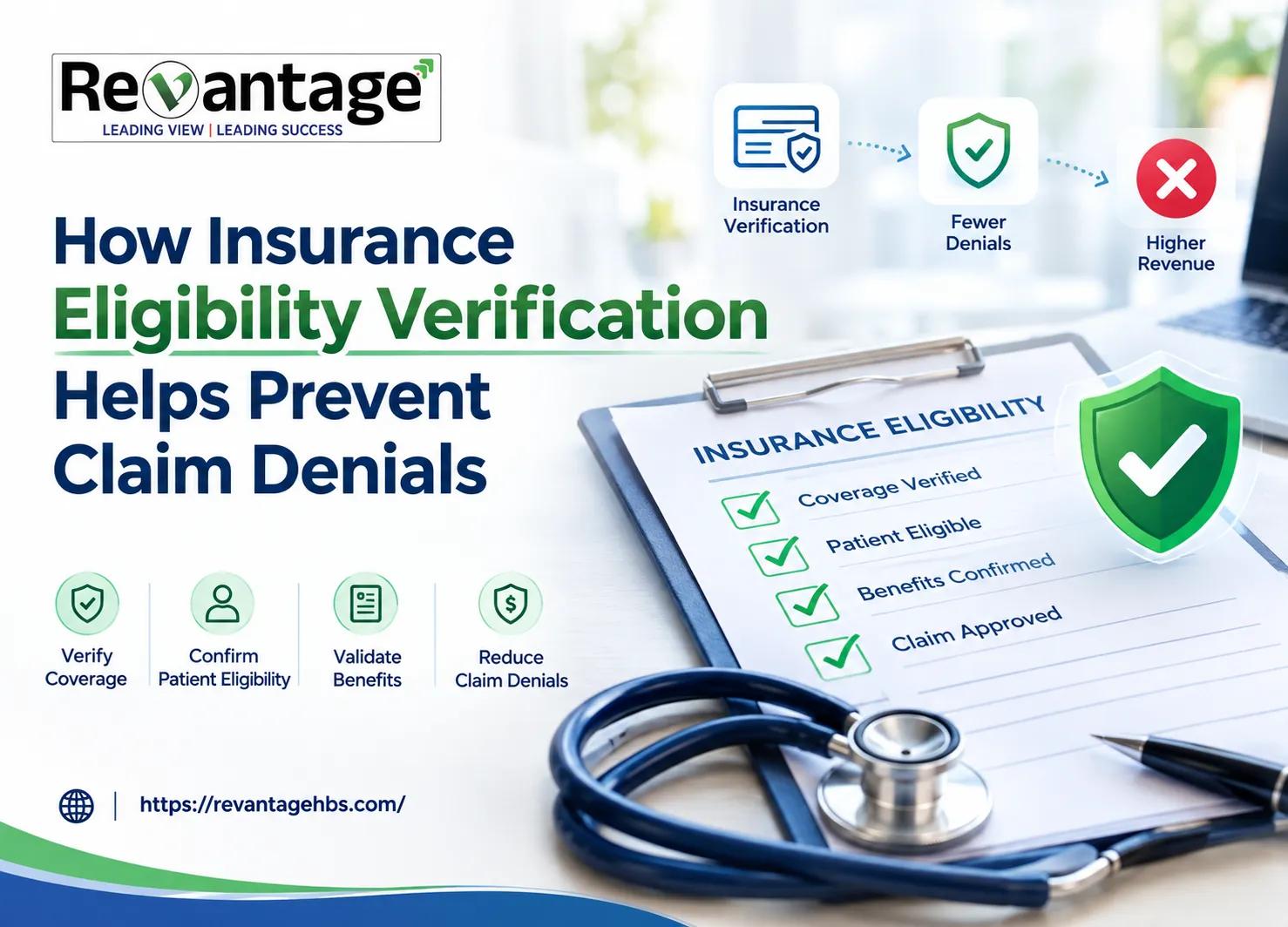
Insurance claim denials can create significant revenue problems for healthcare providers. A claim may be denied because a patient's coverage has expired, the service is not covered, the provider is out of network, or the payer requires authorization. Many of these issues can be identified before the claim is submitted through accurate insurance eligibility verification.
Insurance eligibility verification confirms a patient's insurance coverage, benefits, plan status, and financial responsibility before services are provided. By checking this information early, healthcare organizations can reduce avoidable denials, improve clean claim rates, and provide patients with more accurate cost information.
What Is Insurance Eligibility Verification?
Insurance eligibility verification is the process of confirming a patient's health insurance coverage and benefits with the payer before an appointment or medical service.
The verification process typically checks:
Active or inactive insurance coverage
Policy and member information
Effective and termination dates
Covered services and benefits
Copay, coinsurance, and deductible requirements
Provider network status
Referral requirements
Prior authorization requirements
Service-specific coverage limitations
Patient financial responsibility
This process gives providers a clearer understanding of whether a service is covered and what requirements must be met before submitting a claim.
How Does Eligibility Verification Prevent Claim Denials?
1. Confirms Active Insurance Coverage
One of the most common avoidable denial reasons is inactive or terminated insurance coverage. Patients may change insurance plans, lose coverage, or provide outdated insurance information without realizing it.
Eligibility verification allows providers to confirm coverage before the appointment. If the policy is inactive, staff can request updated insurance information or determine whether another payer should be billed.
This simple step can prevent claims from being submitted to an inactive plan.
2. Identifies Incorrect Patient or Insurance Information
Incorrect demographic and insurance information can cause claim processing problems. A misspelled patient name, incorrect member ID, wrong date of birth, or inaccurate group number may prevent the payer from matching the claim to the patient's policy.
During eligibility verification, billing staff can compare the information provided by the patient with payer records. Identifying discrepancies before claim submission helps reduce registration-related denials and claim rework.
3. Verifies Benefits and Service Coverage
Having active insurance does not necessarily mean every healthcare service is covered.
A patient's plan may exclude certain services or apply specific limitations. For example, a payer may cover a procedure only under certain medical conditions or within a defined number of visits.
Insurance eligibility verification helps staff determine whether the planned service is included under the patient's benefits. This allows providers to address potential coverage issues before delivering the service.
4. Checks Prior Authorization Requirements
Some healthcare services require prior authorization before the payer will provide reimbursement. If authorization is required but not obtained, the resulting claim may be denied.
Eligibility and benefits verification can help identify authorization requirements before treatment. Providers can then initiate the authorization process and collect the necessary documentation.
Although eligibility verification does not replace the prior authorization process, it helps identify payer requirements early enough to act on them.
5. Confirms In-Network and Out-of-Network Status
Network status can directly affect reimbursement and patient responsibility. A provider may be out of network for a patient's particular insurance plan even when the payer itself is accepted by the practice.
Verifying network participation helps providers identify potential reimbursement issues before services are performed. It can also help patients understand whether they may face higher out-of-pocket costs.
6. Reduces Patient Responsibility Errors
Accurate eligibility verification helps estimate a patient's financial responsibility more effectively. Staff can review deductible, copay, coinsurance, and other benefit information available through the payer.
When patients receive clearer information about expected costs, providers can reduce misunderstandings and improve the overall patient financial experience.
7. Improves First-Pass Claim Accuracy
Every rejected or denied claim requires additional administrative work. Staff may need to investigate the issue, correct information, resubmit the claim, or appeal the payer's decision.
Eligibility verification shifts part of this work to the front end of the revenue cycle. By identifying coverage and insurance-related problems before claim submission, providers can improve claim accuracy and support stronger first-pass reimbursement performance.
What Information Should Be Verified Before a Patient Visit?
A comprehensive insurance eligibility verification process should review several important data points, including:
Patient name and date of birth
Member ID and group number
Insurance plan and payer
Policy effective and termination dates
Primary and secondary coverage
Provider network status
Copay and deductible information
Coinsurance requirements
Covered services
Referral and authorization requirements
Benefit limitations and exclusions
Patient financial responsibility
The exact information required may vary by payer, plan, specialty, and service.
When Should Insurance Eligibility Be Verified?
Eligibility should ideally be checked before the patient's appointment or scheduled service. Many healthcare organizations also perform recurring verification because insurance information can change between appointments.
For recurring patients, checking eligibility before each visit can help identify changes in coverage, plan benefits, payer information, or network status.
For high-value procedures and services with authorization requirements, providers should allow enough time to investigate benefits and complete any required authorization steps.
Benefits of a Strong Eligibility Verification Process
A reliable eligibility verification workflow can help healthcare organizations:
Reduce avoidable insurance claim denials
Improve clean claim submission
Reduce claim rework and administrative costs
Identify coverage problems earlier
Improve patient payment transparency
Reduce registration and billing errors
Support faster reimbursement
Strengthen revenue cycle performance
The key is consistency. Even an experienced billing team can miss coverage changes when eligibility checks rely entirely on manual processes or inconsistent workflows.
How Technology Can Improve Eligibility Verification
Healthcare organizations can use payer portals, electronic eligibility transactions, practice management systems, and revenue cycle technology to streamline verification.
Automation can help staff process large volumes of eligibility checks while reducing repetitive administrative tasks. However, technology should support, not replace, proper review. Complex benefits, unusual coverage requirements, and payer-specific rules may still require staff attention.
A standardized workflow that combines technology with trained billing professionals can provide a more reliable approach to eligibility verification.
Why Insurance Eligibility Verification Matters to Revenue Cycle Management
Eligibility verification is an important front-end component of revenue cycle management. Problems that begin during registration can eventually appear as claim rejections, denials, delayed payments, or patient balance issues.
By addressing insurance-related problems before services are delivered, providers can reduce downstream billing challenges. This makes eligibility verification more than an administrative task. It is a proactive revenue protection strategy.
Revantage Healthcare Business Solutions LLC for Insurance Eligibility Verification
Revantage Healthcare Business Solutions LLC helps healthcare providers strengthen their revenue cycle through structured insurance eligibility verification and other healthcare billing solutions. Its approach focuses on verifying coverage information, identifying potential billing issues, and supporting accurate claim submission.
By addressing insurance and eligibility concerns early in the revenue cycle, providers can reduce avoidable claim denials, improve operational efficiency, and create a more predictable reimbursement process. A consistent eligibility verification workflow can also help billing teams spend less time correcting preventable errors and more time managing higher-value revenue cycle activities.
Frequently Asked Questions
What is the purpose of insurance eligibility verification?
The purpose of insurance eligibility verification is to confirm a patient's active coverage, benefits, network status, financial responsibility, and payer requirements before healthcare services are provided.
Can eligibility verification prevent all claim denials?
No. Eligibility verification cannot prevent every denial because claims may be denied for coding, documentation, medical necessity, authorization, payer processing, and other reasons. However, it can reduce many coverage and insurance-related denials.
Why is eligibility verification important before billing?
Eligibility verification helps confirm that the patient's insurance is active and that the planned service meets applicable coverage requirements. This can reduce avoidable errors before a claim reaches the payer.
How often should insurance eligibility be verified?
Eligibility should generally be verified before scheduled services, especially for recurring patients or high-value procedures. Insurance coverage and benefits can change, so relying on old verification information may create billing problems.
Does eligibility verification check prior authorization?
Eligibility and benefits verification can identify whether prior authorization may be required. The provider must still complete the payer's authorization process when authorization is necessary.
Final Takeaway
Insurance eligibility verification helps healthcare providers address coverage and insurance-related problems before they become claim denials. By confirming active coverage, patient information, benefits, network status, financial responsibility, and payer requirements, providers can improve front-end accuracy and support a healthier revenue cycle.
A proactive eligibility verification process can reduce preventable denials, minimize rework, improve patient communication, and support faster reimbursement.